
Cabarrus County Arrest Records and Charges
Cabarrus County arrest records begin on the law-enforcement side. The Cabarrus County Sheriff's Office operates public P2C tools and a Civil and Records unit, while the jail roster can show current custody and a primary charge. That booking-side record is not the full court case. Once a prosecutor files or pursues charges, the charge record becomes part of the criminal court file handled by the Cabarrus County Clerk of Superior Court and the statewide eCourts system.
The key local warning comes from Cabarrus P2C: people listed as arrested and charged are presumed innocent, charges can change because of court disposition, and P2C may not reflect the most current status. P2C tells users to contact the Clerk of Court at 704-262-5500 for the current court disposition on each inmate. That disclaimer is central to any Cabarrus County arrest records lookup. The arrest listing can help identify a person, arrest date, booking agency, and primary charge. The Clerk's record is the place to confirm dismissals, reductions, pleas, verdicts, and sentencing.
The Sheriff's public homepage is a source for the law-enforcement side of Cabarrus arrest records, including Sheriff Van W. Shaw, the main office contact, and the Sheriff's public-safety services.
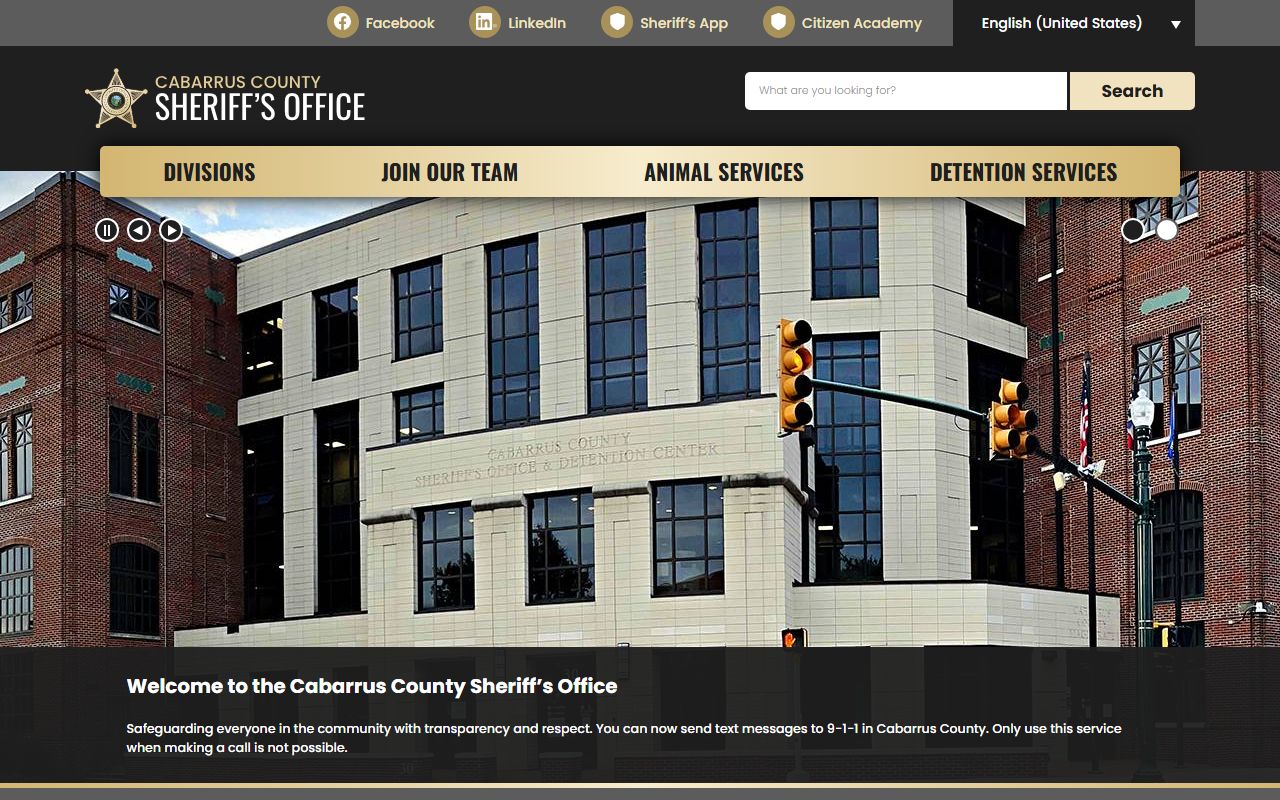
The arrest-to-charges path often starts with that agency side, but the court record becomes the better source once prosecution and court disposition are at issue.
Find Cabarrus County Arrest Records
Cabarrus users usually need more than one channel because no single public screen answers every arrest and charge question. The Sheriff's P2C tools can show public custody, wanted-list, arrest, incident, and civil-process information. The Sheriff Civil and Records division provides the official records contact path for arrest and incident reports, with phone 704-920-3100, fax 704-920-3055, email cabarrusrecords@cabarruscounty.us, and office location at 30 Corban Avenue SE, 5th floor, Concord. The court file is searched through the eCourts Portal or by contacting the Clerk.
- Use the Cabarrus Sheriff's P2C tools for public arrest, incident, inmate, civil process, and wanted-list context.
- Search the North Carolina eCourts Portal by defendant name or case number when the question is about court charges after arrest.
- Open the case summary and read each charge with its events, hearings, disposition, and financial entries where public.
- Contact the Cabarrus County Clerk of Superior Court for the current disposition, certified copies, older files, or background-check searches.
- Use the Sheriff Civil and Records unit or Cabarrus JustFOIA when the requested item is a law-enforcement report rather than a court case file.
The Sheriff Civil and Records page is the local source for records contact details and report-related channels.
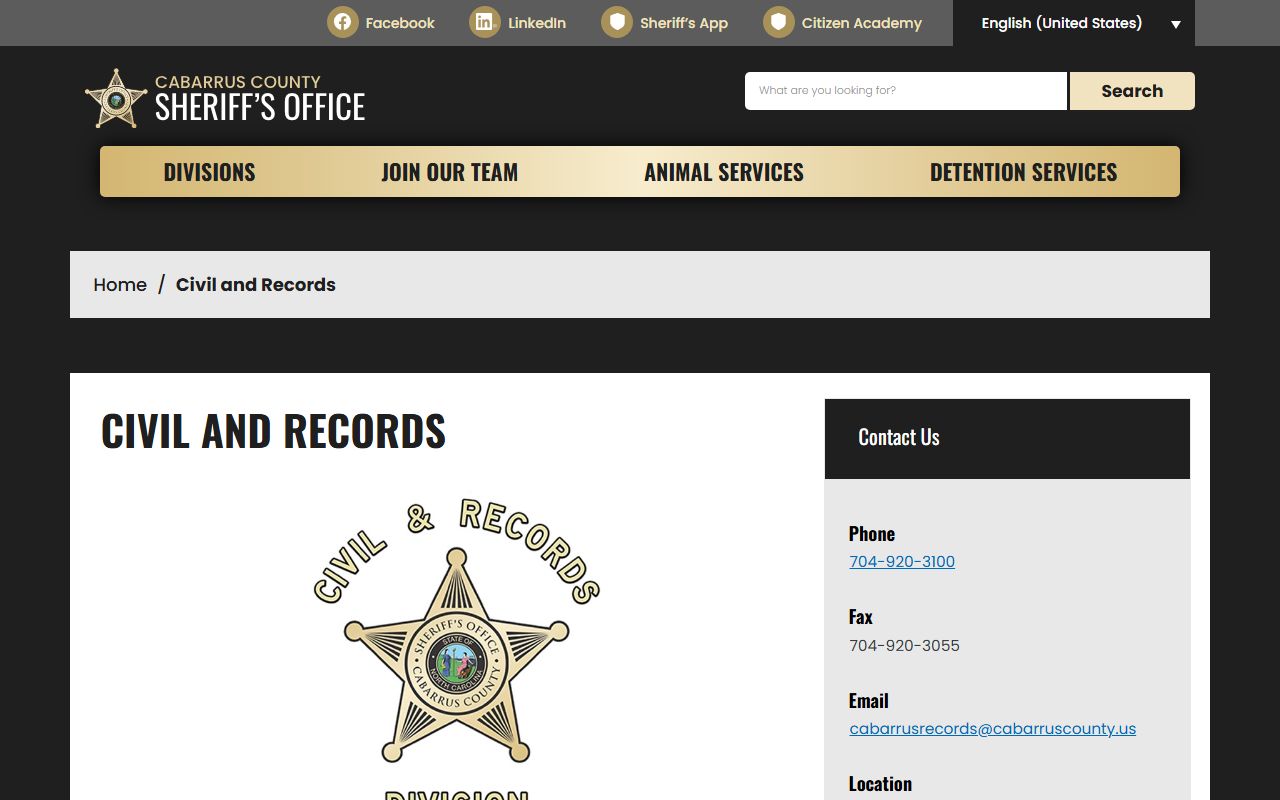
That records unit is separate from the Clerk, so users should choose the office based on whether they need an arrest report or the court disposition.
Cabarrus Charges After Arrest
Charges after arrest are shaped by law enforcement, the Magistrate, and the District Attorney, then tracked through the court record. Cabarrus County is Prosecutorial District 25, and the official District Attorney page names Ashlie Shanley as District Attorney. The DA represents the State, prosecutes criminal cases filed in the district, prepares the criminal trial docket, advises law enforcement officers, and handles criminal and some juvenile matters. The DA phone in the Cabarrus court contact directory is (704) 262-5510.
| Document | Who Is Involved | What It Does |
|---|---|---|
| Complaint | Law enforcement, prosecutor, or court process depending on the case path. | States the accusation that begins or supports court action. |
| Information | Prosecutor-filed charging document in contexts where that procedure is used. | Sets out formal charges without a grand jury indictment. |
| Indictment | Grand jury and prosecutor for felony prosecution. | Formally charges felony counts for Superior Court handling. |
North Carolina District Court handles misdemeanors, infractions, first appearances, and probable-cause activity. Superior Court handles felony criminal cases. Because a felony arrest can begin with District Court activity and later move to Superior Court, the court charge record may show more than one procedural stage before the final disposition appears. For the full case file and sentencing record, use the Cabarrus County criminal court records page.
Cabarrus Charge Status
A charge status is a snapshot of where the accusation stands. Cabarrus arrest records may list a charge at booking, but the court file can later show that a charge was amended, reduced, dismissed, tried, or resolved by plea. One arrest can produce several separate counts. Each count may have a different disposition. The safest practice is to read the court events in sequence and confirm the latest Clerk disposition before drawing a conclusion.
| Status | What It Means in the Court Record |
|---|---|
| Pending | The charge remains open or unresolved in the court process. |
| Amended | The charge text, level, or count changed through court or prosecution action. |
| Reduced | The charge moved to a lesser offense or lower severity level. |
| Dismissed | The charge was ended without a conviction on that count. |
| Disposed | The court entered an outcome such as guilty, not guilty, dismissed, or another final status. |
The P2C disclaimer is the practical reason this status check matters. A public jail or arrest listing may be a useful lead, but Cabarrus P2C itself directs users to the Clerk of Court for the current court disposition.
Cabarrus Charges vs Convictions
Arrest records and charge records should never be read as automatic conviction records. A person can be arrested, booked, and charged, then later have the charge dismissed, reduced, or resolved by a not-guilty finding. A conviction requires a guilty plea or finding of guilt. The distinction is especially important when an arrest record is being compared with a court record or a state offender record.
| Point | Charge | Conviction |
|---|---|---|
| Meaning | An accusation after arrest or filing. | A guilty plea or court finding of guilt. |
| Where Found | P2C, charging documents, Portal summaries, and Clerk records. | Disposition, judgment, sentence, and criminal-history records. |
| Can Change | May be amended, reduced, dismissed, or dropped. | Changes only through later court action, appeal, correction, or post-judgment relief. |
| Best Local Check | Review charge events and the latest Clerk file. | Confirm the final disposition with the Clerk or public case summary. |
The North Carolina Department of Adult Correction public-record channel is a state-level source for prison, probation, and parole information, not for Cabarrus jail custody.
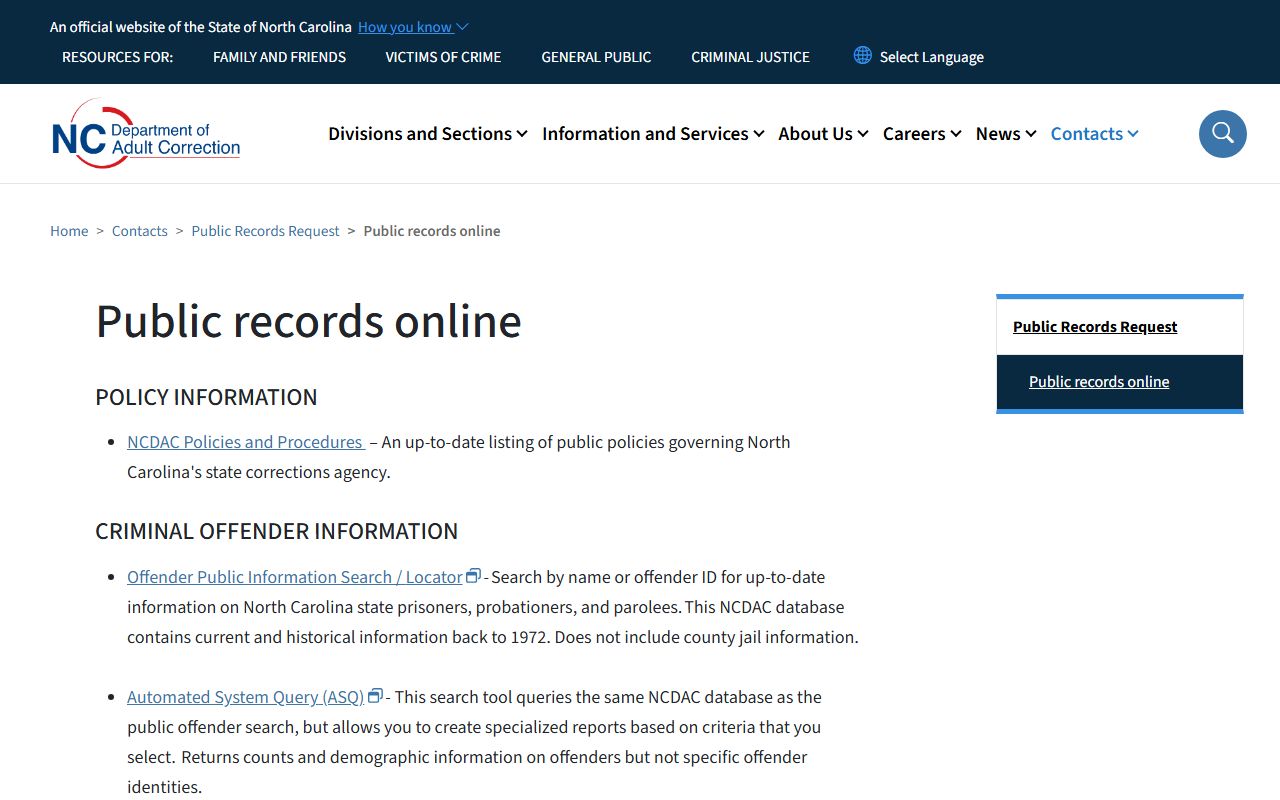
That state distinction helps keep local arrest records, court charges, and state correction records in the right lanes.
State and Offender Lookups
State-level searches can help when the question goes beyond a Cabarrus arrest or active court charge. The North Carolina Department of Adult Correction public-records page points to offender public information for state prisoners, probationers, and parolees. The actual Offender Public Information Search searches by name or offender ID and contains current and historical information back to 1972. Research notes make one limit clear: DAC does not include county jail information.
That means a person held at the Cabarrus County Detention Center may appear in the local P2C inmate inquiry but not in the state prison locator. A person who has moved from local custody into state prison, probation, or parole may appear in DAC records after the case outcome. Court charges after arrest still need the Portal or Clerk for the underlying court disposition. The search source should match the question: arrest report, current jail custody, pending court charge, final disposition, or state custody status.
The state offender search is useful only after the scope changes from local arrest data to state prison, probation, or parole records.
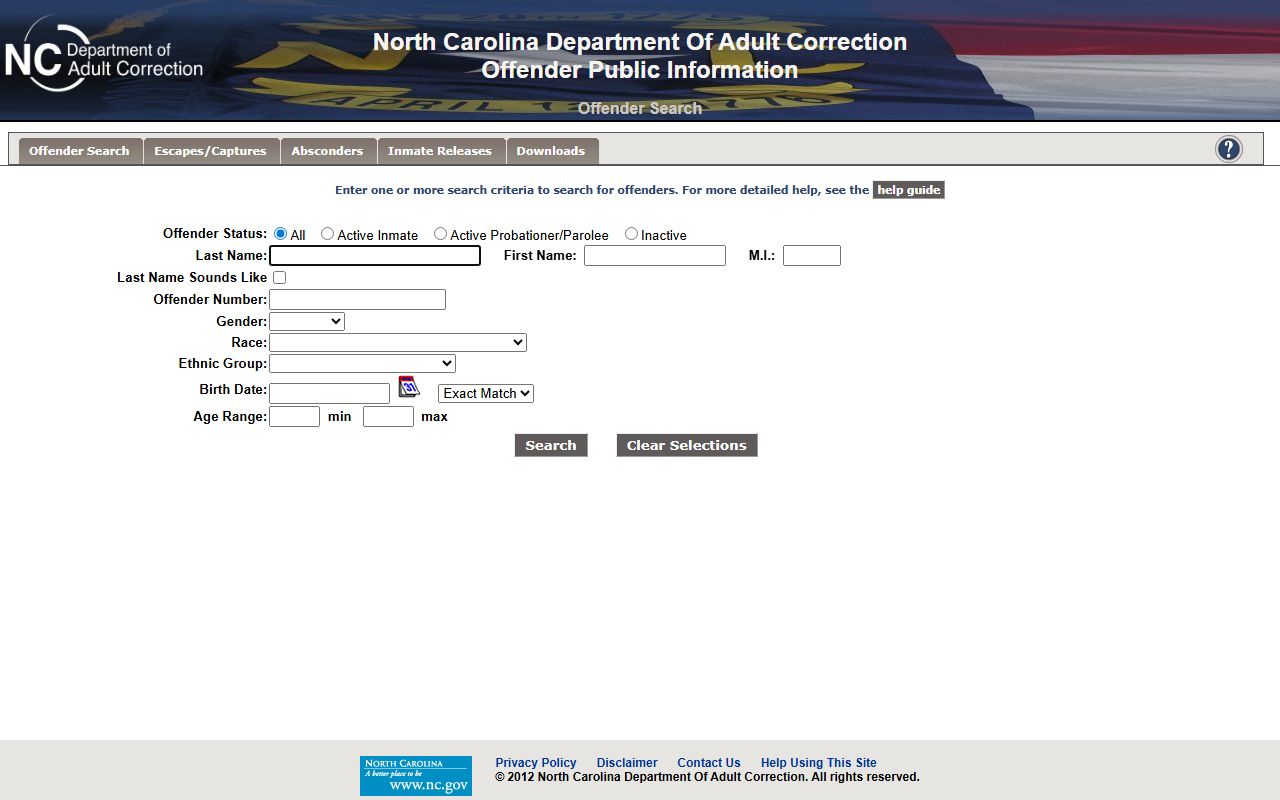
For a current Cabarrus court charge, the Clerk and Portal remain closer to the actual criminal case file.
Sheriff App and Public Records
The Cabarrus County Sheriff's Office app adds another access channel for arrest-adjacent information. The Sheriff's July 8, 2025 app-upgrade article says the app is free for Apple and Android devices and consolidates enhanced inmate search and jail information, including court date lookup, public defender or Legal Aid contact information, bail bonding, and booking procedures. The app also includes contact information, news, emergency alerts, crime tip submission, sex offender tools, local weather, and Sheriff's Office forms.
The app is not a substitute for the Clerk's court disposition. It is useful because it places jail, booking, court-date, and defense-contact context near the public-safety functions that users often need after an arrest. A person trying to track charges after arrest should still separate the app or P2C listing from the formal criminal case file. The Sheriff's app can help locate custody-related information. The Clerk confirms the court outcome.
The Sheriff's app upgrade article is the local source for the app's enhanced inmate search, court date lookup, jail information, and booking procedure features.
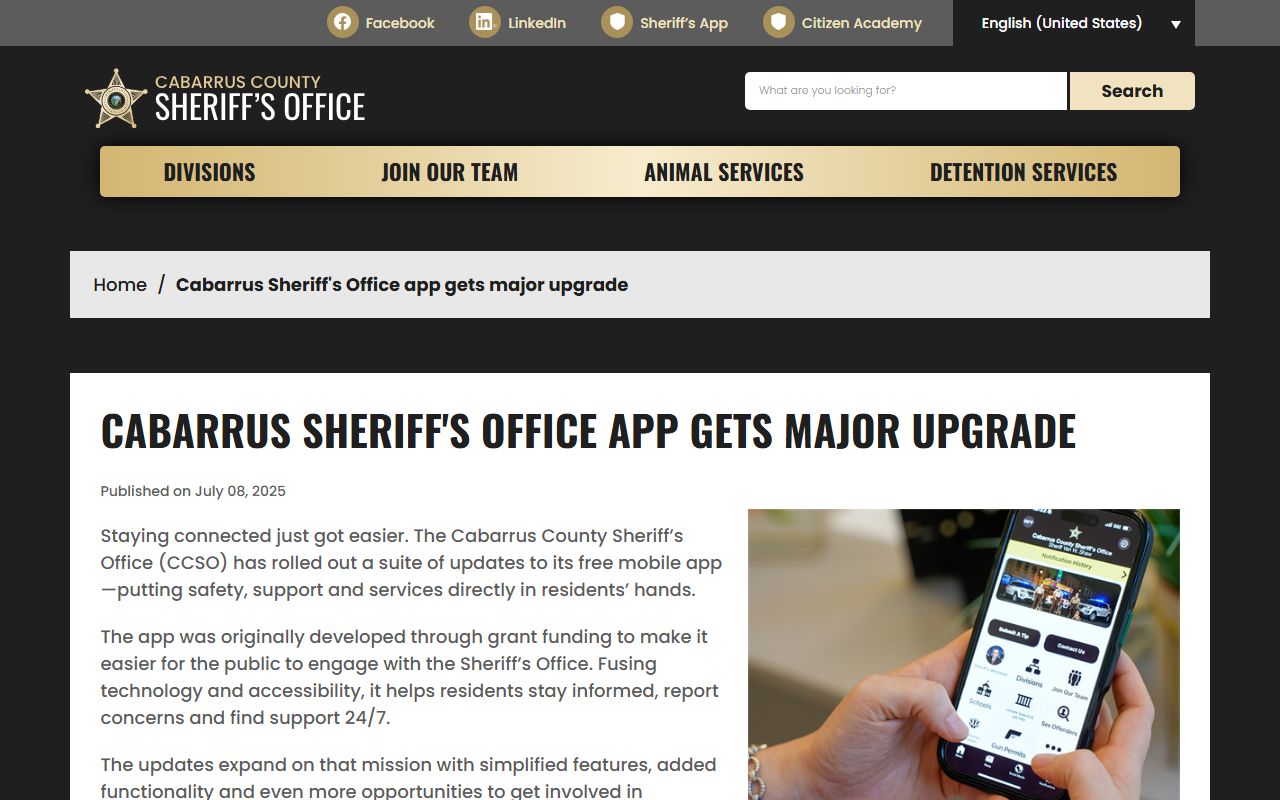
Because warrant lookup was not explicitly confirmed in the researched app text, warrant status should still be checked through the P2C Wanted List, Sheriff records, Clerk, or Magistrate.
Restricted Cabarrus Charge Records
Not every arrest or charge-related record is public in the same way. Juvenile records are restricted by Chapter 7B. Abuse, neglect, and dependency juvenile records are withheld from public inspection except as allowed by court order or statute. Adoption and many mental-health matters are confidential. Sealed records are hidden by court order or statute. Expunged records are cleared from public record under Chapter 15A procedures. Law-enforcement criminal-investigation records are also treated differently from ordinary public records under G.S. 132-1.4.
Dismissed charges and not-guilty findings may be eligible for expunction under G.S. 15A-146, while certain nonviolent misdemeanor and felony convictions may have expunction paths under G.S. 15A-145.5. The petition is tied to the county court connected to the charge or conviction. Cabarrus users should not assume a private website, jail list, or old copied page updates as soon as an expunction order is entered. The Clerk's record and the court order control the official result.
Important: For the current Cabarrus court disposition, use the Clerk of Superior Court rather than an arrest listing alone.