
Cabarrus County Probate Records
Cabarrus County does not have a separate county probate court page in the assigned research. Probate is handled through estates and special proceedings before the Cabarrus County Clerk of Superior Court within the North Carolina General Court of Justice. The statewide Judicial Branch wills and estates material is the official starting point for the basic process, but the local file, terminal search, certified copy, and older paper-file path runs through the Clerk at the Cabarrus County Courthouse.
Probate records can include applications or petitions, wills, orders admitting a will, letters testamentary, letters of administration, fiduciary details, inventories, accountings, creditor notices, claims, motions, hearings, distributions, guardianship filings, and special proceeding orders. Portal records may show estate case summaries and probate causes of action when public access permits. Paper files and certified copies still require Clerk contact when the online record is incomplete, older, or not available to anonymous users.
The statewide North Carolina wills and estates help topic is the official source for estate-process background.
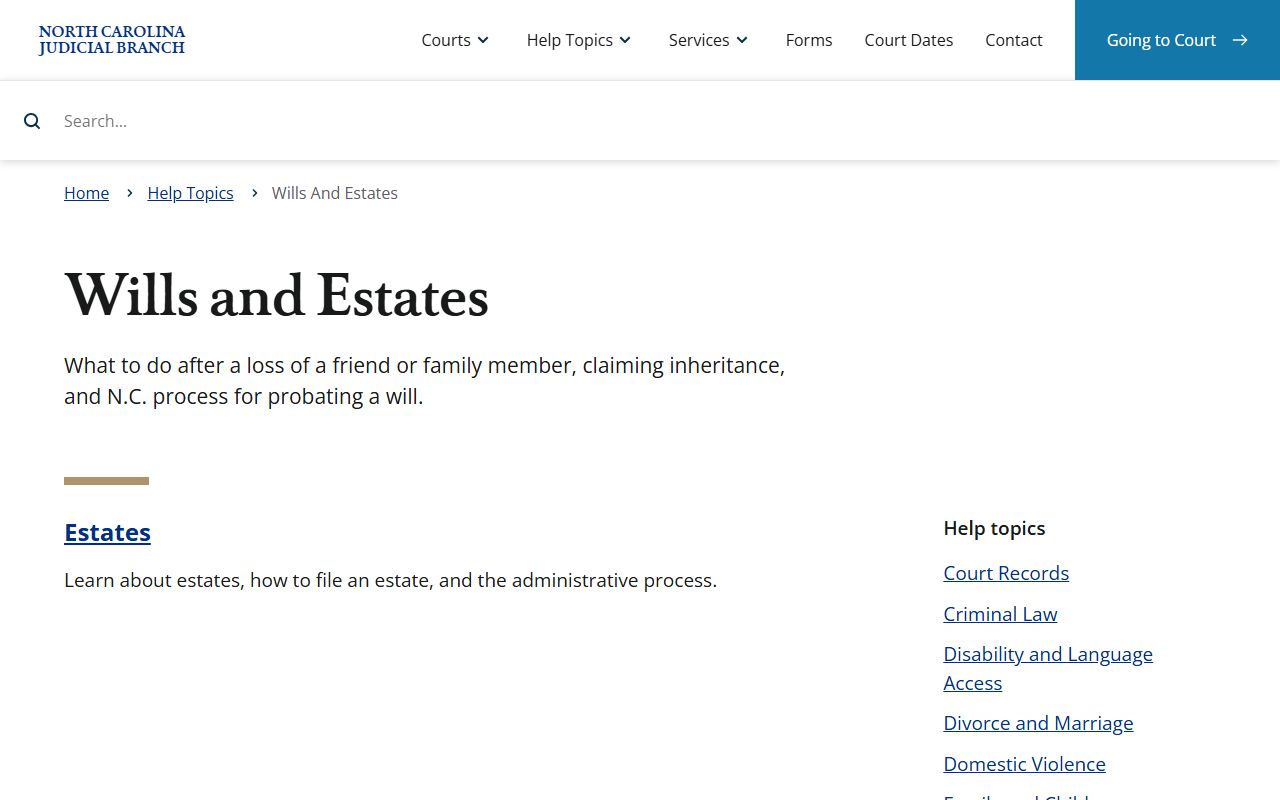
Use the statewide help topic for process terms, then confirm Cabarrus County estate filing and copy details with the local Clerk.
Cabarrus County Probate Terms
Estate and special proceeding files use terms that differ from ordinary civil or criminal case records. These definitions keep the Cabarrus County probate search tied to the record type shown in the Portal or the Clerk's paper file.
- Testator
- A person who made a will.
- Executor
- A person named to carry out a will after authority is granted.
- Intestate
- Dying without a will, which changes how estate authority and distribution are handled.
- Fiduciary
- A person with legal duties to manage estate property, notices, claims, inventory, accounting, or distribution.
- Guardianship
- A proceeding involving authority over a person or property, often with restricted details when minors or incompetency issues are involved.
- Conservatorship
- A term often used for financial protection in some systems; in Cabarrus research, guardianship and incompetency restrictions are the more direct local search concern.
Search Cabarrus County Estates
The online channel for Cabarrus County probate records is the North Carolina eCourts Portal. Portal Smart Search includes Estates and Special Proceedings as advanced filter categories, and the training material says case summaries can show causes of action for Probate cases where public. Use the Cabarrus location filter, then search by estate or special proceeding case number, party name, decedent name, fiduciary name, case status, or filing-date range.
| Field Label | Type | Required | Options or Format Notes |
|---|---|---|---|
| Smart Search | Text | Optional | Search by estate or special proceeding case number, party name, or decedent name. |
| Location | Dropdown or filter | Optional | Choose Cabarrus County. |
| Case Type | Dropdown or filter | Optional | Estates and Special Proceedings, including nonconfidential special proceedings. |
| Case Status | Dropdown or filter | Optional | Open, closed, or disposed values vary by case category. |
| Filing Date Range | Date range | Optional | Helpful when narrowing older estate filings. |
| Party Name | Text | Optional | Decedent, fiduciary, petitioner, respondent, or interested party depending on the file. |
For paper files, older records, or certified copies, the research points back to the Clerk of Superior Court. Mail requests should not be sent until the requester has confirmed the file identifiers, copy type, and fee with the Clerk, because the assigned research did not locate a Cabarrus-specific probate copy fee schedule.
Cabarrus County Probate Contact
The local probate contact is the Cabarrus County Clerk of Superior Court. That office handles estates, special proceedings, court files, public terminals, paper files, and copies. The same courthouse security rules apply to probate visitors as to other court visitors, including the Judicial Branch rule that cell phones are not permitted and bags may be searched.
Cabarrus County Clerk of Superior Court
Cabarrus County Courthouse
61 Union Street South
Concord, NC 28025
(704) 262-5500
Monday-Friday, 8 AM-5 PM
Visitors who need an estate file should bring the decedent name, case number if known, approximate filing year, and any fiduciary or party names that could help staff identify the correct record.
Cabarrus County Probate Filing
The research gives a local filing sequence rather than a single online-only process. Probate in Cabarrus County begins by identifying whether local estate administration is needed, then moving through the Clerk's estate or special proceedings counter. Contested matters, guardianship issues, or special proceedings may require hearings before the Clerk or a judge.
- Determine whether there is a will and whether the decedent was domiciled in Cabarrus County or owned property requiring local administration.
- Contact or visit the Clerk of Superior Court estates or special proceedings counter.
- File the appropriate application or petition and provide the original will if one exists.
- The Clerk issues authority documents if statutory requirements are met.
- The fiduciary gives required notices, collects assets, handles creditor claims, files inventory and accounting material, and seeks orders as needed.
- Routine estates close through final accounting and distribution. Complicated estates may take longer due to real estate, creditor disputes, missing heirs, or litigation.
Cabarrus County Probate Fees
The assigned research did not locate an exact Cabarrus-specific probate fee schedule for estate filings, letters, guardianship filings, or certified probate copies. That gap should not be filled with guessed dollar amounts. Before filing or mailing a copy request, confirm the current amount with the Cabarrus County Clerk of Superior Court or the official North Carolina court costs and fees schedule.
| Probate Item | Published Cabarrus Amount | Action |
|---|---|---|
| Estate filing or application | Exact local amount not located in assigned research | Confirm with Clerk before filing. |
| Letters testamentary or letters of administration | Exact local amount not located in assigned research | Confirm with Clerk before requesting copies. |
| Certified probate copy | Exact local amount not located in assigned research | Confirm copy fee and file identifiers first. |
| Guardianship or special proceeding filing | Exact local amount not located in assigned research | Confirm with Clerk because restrictions may also apply. |
Note: A missing local probate fee is a research limitation, not permission to use a statewide estimate without Clerk confirmation.
Restricted Cabarrus County Probate Records
Ordinary estate administration records are generally public unless a statute or court order restricts the information. The research flags guardianship, incompetency, minor, sensitive financial, and medical details as likely restriction points. Portal elevated access is limited by verified need and statutory authority, so some entries may be hidden from anonymous public users even when the case category appears in search results.
The juvenile statutes assigned in the manifest are not probate filing manuals, but they show how North Carolina treats sensitive court records differently from ordinary public files. G.S. 7B-3000 covers juvenile court records, and G.S. 7B-2901 restricts abuse, neglect, and dependency records. Those limits matter when a probate-related search touches minors or guardianship issues.
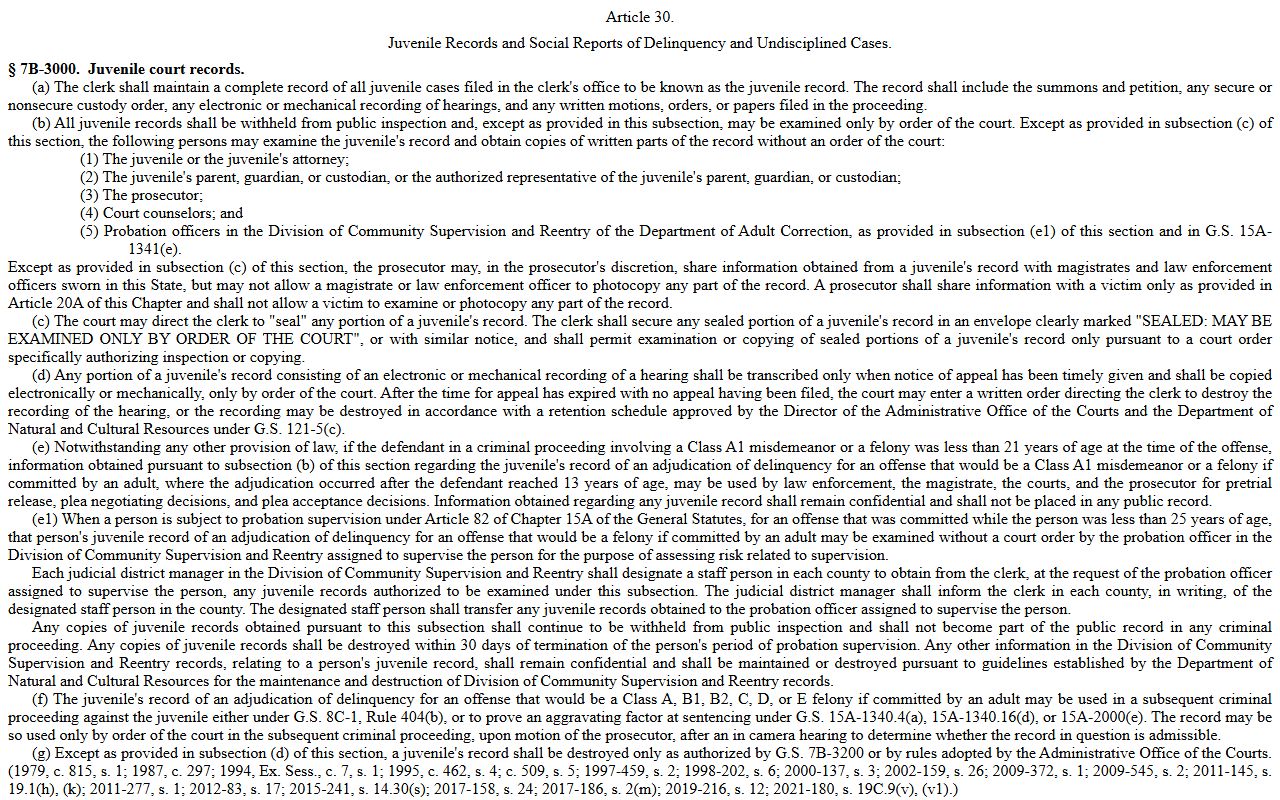
Juvenile and minor-related details should not be treated as ordinary Cabarrus County probate records available to every public searcher.
The related abuse, neglect, and dependency record statute is another restriction source.
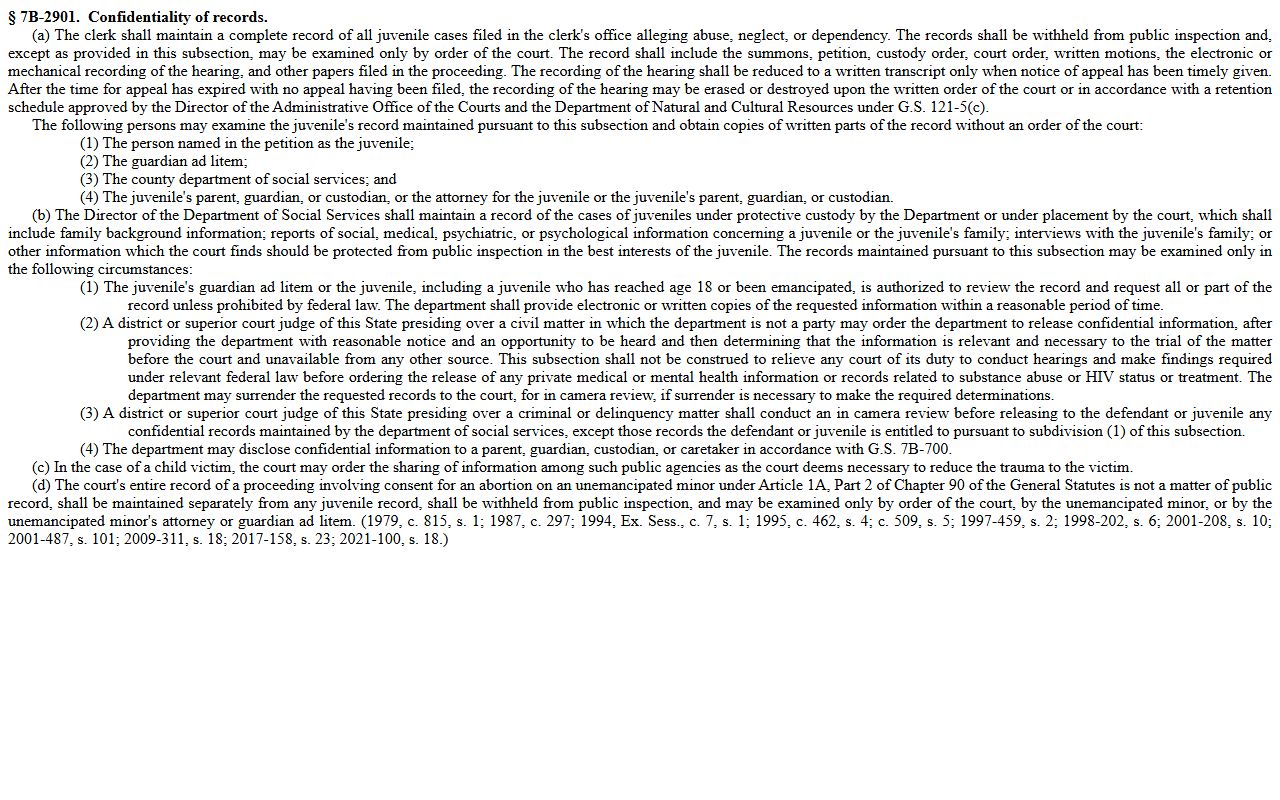
When a case involves protected family or minor information, the Clerk may withhold, redact, or require a court order before review.
Older Cabarrus County Estate Records
Very old Cabarrus estate and special proceeding records may not be available through the public Portal. The research points users to Clerk paper files first, then state archives or historical custody for very old materials. Do not assume all early estate papers, wills, or special proceedings are online, especially when the file predates modern electronic court systems.
For a practical search, start with the decedent's legal name, approximate death date, possible fiduciary name, and any known case number. If the Portal does not show a match, the Clerk can help determine whether the file is paper-only, restricted, misindexed, or held outside the modern electronic system. Older estate work can also involve land, marriage, or vital records, but those supporting records are kept by the Register of Deeds and do not replace the estate file itself.
Federal court systems can appear during estate-related research when a decedent, business, creditor, or party has federal litigation or bankruptcy issues, but those records are separate from Cabarrus County probate files. The U.S. Bankruptcy Court for the Middle District of North Carolina and federal CM/ECF systems do not replace the Clerk's Cabarrus estate file.
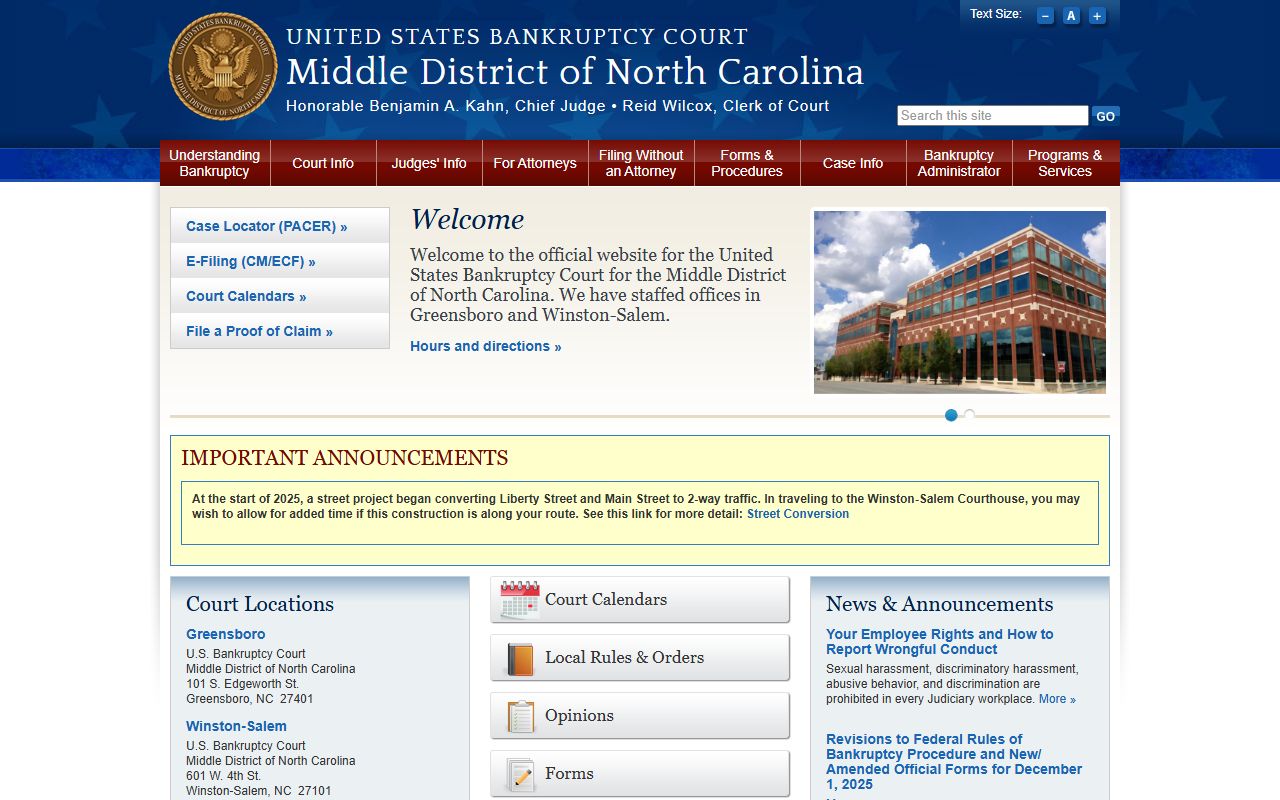
Bankruptcy records can affect an estate, but they are maintained by the federal bankruptcy court rather than the Cabarrus Clerk's estate counter.
The federal Middle District CM/ECF login is another separate system for federal filings.
Use federal systems only for federal case records. Cabarrus County probate records remain with the Clerk unless transferred to archives or restricted by law.