
Cabarrus County Criminal Court Files
A criminal court record in Cabarrus County is the file maintained by the Cabarrus County Clerk of Superior Court once criminal process and prosecution activity become part of the court system. The file can include the charges as filed, criminal process, bond or pretrial release entries, appearances, motions, plea paperwork, dismissals, judgments, sentencing terms, probation conditions, court costs, fines, restitution, and a case-event history. The statewide North Carolina eCourts Portal is the main online starting point for public case summaries, while the Clerk remains the local custodian for public terminals, paper files, certified copies, and criminal background-check searches.
Cabarrus criminal records come from Superior Court and District Court within the North Carolina General Court of Justice. Superior Court handles felony criminal matters, while District Court handles misdemeanors, infractions, first appearances, probable-cause activity, and other high-volume criminal proceedings. The same courthouse and Clerk support both divisions. A jail or arrest record may show the first charge tied to custody, but the court record is the better source for pleas, dismissals, judgments, sentencing, and the current disposition. For the arrest-to-charge path itself, see the Cabarrus County arrest records and court charges page.
The North Carolina legislature's public-record framework is part of the criminal-record background in Cabarrus County. The public-record definition in G.S. 132-1 gives the broad state rule for public records, while court files are handled through the Judicial Branch and the Clerk's statutory duties.
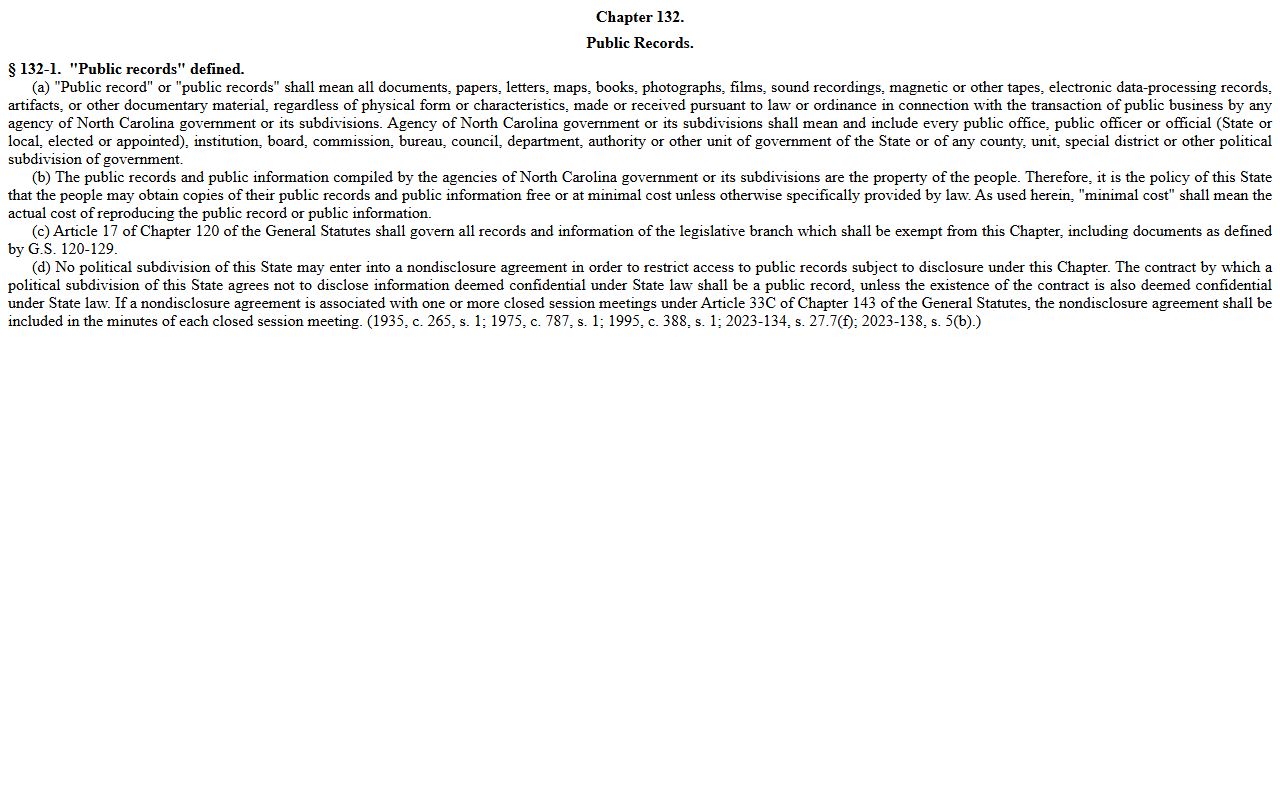
That public-record context helps explain why the Portal and Clerk paths both matter: one is a search interface, and the other is the official record custodian for the local case file.
Search Cabarrus County Criminal Records
The eCourts Portal Smart Search supports public searches by party name or case number and can be narrowed with advanced filters. Official Portal training says a case summary, also called the Register of Actions, may show case information, assignment information, parties, events, dispositions, hearings, financial information, and public documents where access is permitted. For criminal searches, a known case number gives the cleanest result. A name search should use last name and first name, and date of birth can help narrow matches when it is legally available and known.
- Open the North Carolina eCourts Portal and choose Smart Search for case information.
- Enter the criminal case number if known. The Enterprise Justice format has a two-digit year, case type letters, six-digit sequence, and three-digit county identifier.
- Use Advanced Filtering Options to select Cabarrus County, add criminal case type filters, and narrow by filing-date range or case status.
- Open the matching case summary and review case events, hearings, dispositions, financial entries, and public documents.
- Visit or contact the Cabarrus County Clerk of Superior Court when a public document is missing, the case is older, or a certified copy is needed.
The Judicial Branch's obtaining court records guidance is especially important for background checks. It says criminal case information can be accessed by visiting a public self-service terminal in a clerk's office in any county, and that people performing background checks should use the county clerk's office rather than relying on Portal alone. That is the safer path when the user needs an official name search, a broader criminal history check, or a court-verified disposition.
Cabarrus Criminal Case Flow
A Cabarrus criminal court file changes as the prosecution moves through the trial divisions. District Court may hold early proceedings, misdemeanors, and probable-cause steps, while felonies move to Superior Court. Each stage can create a docket entry or document in the Clerk's file. The case flow is best read as a sequence, not as a single search result, because a charge can be filed, amended, dismissed, reduced, or resolved by plea or trial.
Case flow: Charges Filed › Arraignment › Pretrial and Motions › Plea or Trial › Disposition › Sentencing.
At arraignment, the court addresses the filed charges and plea or case status. Pretrial entries may include bond changes, discovery disputes, motions, continuances, and hearing notices. A plea or trial creates the outcome path. Disposition means the result for the charge, such as guilty, not guilty, dismissed, or otherwise disposed. Sentencing records can show probation, fines, costs, restitution, confinement terms, and other conditions. A single defendant can have more than one charge, and each charge may have its own disposition.
The criminal-investigation statute, G.S. 132-1.4, is a useful boundary for Cabarrus criminal records because law-enforcement investigative records are treated differently from ordinary public records.
Cabarrus Criminal Record Fields
Cabarrus County criminal court records should be read field by field. The Portal summary and the Clerk's file can show public case data, but the meaning depends on the field. A criminal case number does not equal a conviction. A charge field does not prove guilt. A disposition or judgment entry is the part that shows how a court resolved the charge. Financial entries can also matter because criminal cases may include costs, fines, restitution, attorney fees, probation fees, or other payment categories.
| Field | What It Shows |
|---|---|
| Case number | Enterprise Justice identifier with year, case type letters, sequence number, and county identifier. |
| Defendant and parties | Names and role labels, including the criminal defendant and attorneys where public. |
| Court division | Whether the matter is in Superior Court, District Court, or a related proceeding. |
| Charges | Filed criminal counts, which can later be amended, reduced, dismissed, or resolved. |
| Events and hearings | Register of Actions entries such as appearances, continuances, motions, orders, and hearing dates. |
| Disposition | The outcome for the case or charge, including guilty, not guilty, dismissed, or disposed status. |
| Sentence and financials | Sentence terms, probation conditions, costs, fines, restitution, and other payment categories where applicable. |
| Documents and restrictions | Public documents when available, plus redactions or restrictions for protected records. |
For official defense context, North Carolina Indigent Defense Services for Cabarrus County identifies Defender District 19A and directs people who need to know whether they have a lawyer to contact the Clerk of Superior Court.
Cabarrus Charges vs Convictions
Charges and convictions are not the same record event. A Cabarrus criminal court record can show a filed charge even if that charge is later dismissed, reduced, amended, or resolved by a not-guilty finding. A conviction requires a guilty plea or finding of guilt. That difference matters for job screening, housing questions, firearm restrictions, immigration questions, and court-cost obligations. The Clerk's disposition is the key fact to verify when a P2C listing, arrest report, or old docket entry still shows a charge that later changed in court.
| Point | Charge | Conviction |
|---|---|---|
| Meaning | An accusation filed in the criminal case. | A guilty plea or finding of guilt. |
| Where It Appears | Booking data, charging documents, Portal summaries, and Clerk records. | Disposition, judgment, sentencing, and criminal-history records. |
| Can Change | May be amended, reduced, added, dismissed, or dropped. | Changes only through court action, appeal, correction, or post-judgment relief. |
| Best Check | Read the charge list and later case events. | Confirm the final disposition with the Clerk or case summary. |
The North Carolina Sex Offender and Public Protection Registry is separate from the Cabarrus criminal court file. Registry status should not be inferred from a charge alone; it depends on qualifying conviction and registration rules.
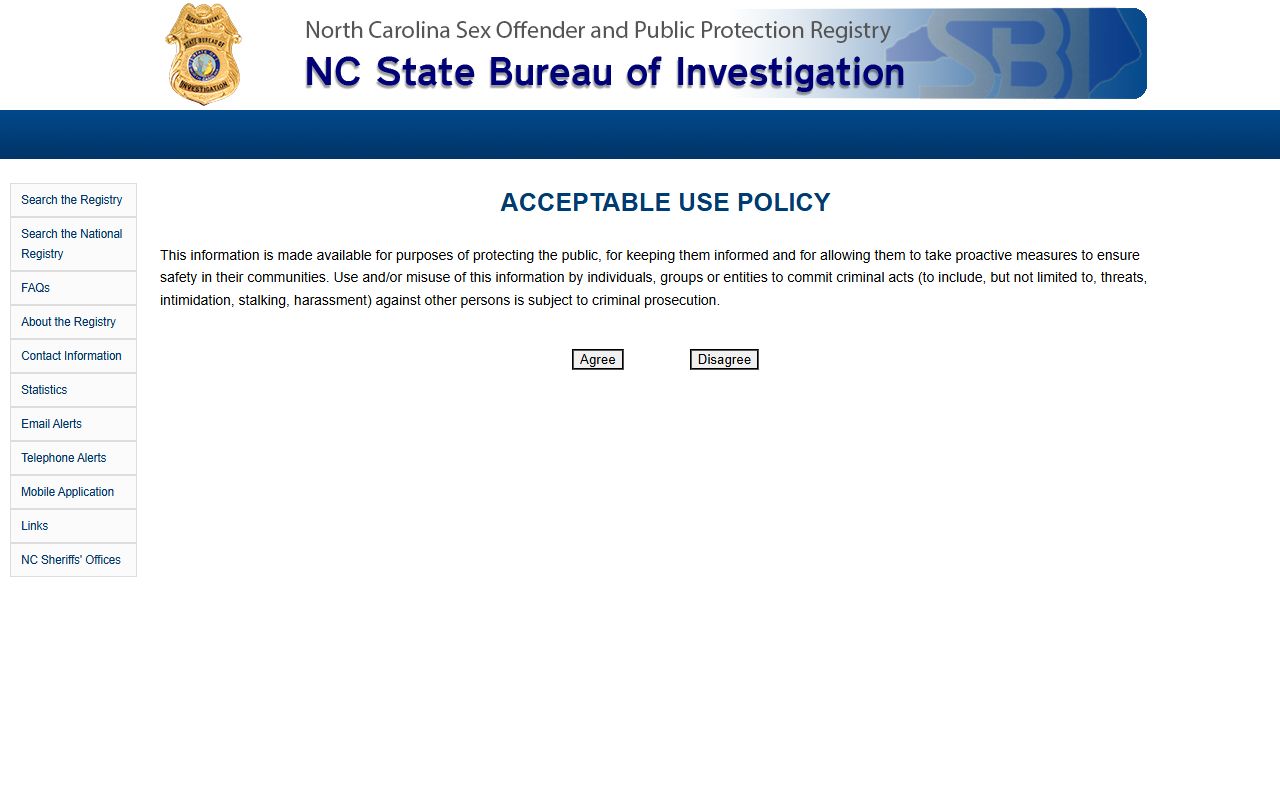
That separation is one reason court users should confirm the final judgment instead of treating every criminal charge as a lasting conviction record.
Cabarrus Criminal Prosecution Context
Cabarrus County is Prosecutorial District 25. The official District Attorney page names Ashlie Shanley as District Attorney for the Twenty-Fifth Prosecutorial District, which covers Cabarrus County. The DA represents the State and crime victims in criminal proceedings, prosecutes criminal cases filed in the district, prepares criminal trial dockets, advises law enforcement officers, and handles some juvenile matters. The Cabarrus court contact directory lists the District Attorney phone number as (704) 262-5510.
Defense appointment is handled through the court and North Carolina Indigent Defense Services rather than by a county-run public defender page found in the research. IDS tells Cabarrus users who need to know whether they have a lawyer to contact the Clerk of Superior Court at (704) 262-5500. A criminal record may show defense counsel, attorney events, or appointed-counsel related entries, but the official question of representation should be checked with the Clerk or through the court process.
The DA and IDS context explains why a criminal file can contain more than the charge name. Trial docket settings, plea entries, motions, continuances, bond issues, and counsel status are part of the process record. They also explain why the Portal's public summary is useful but not always enough for certified copies, older paper files, or background-check work.
Cabarrus Criminal Access Rules
North Carolina law gives public access to many court records, but the rules are not the same for every criminal file or law-enforcement record. G.S. 7A-109 requires clerks to maintain court records, files, dockets, and indexes prescribed by the Administrative Office of the Courts and makes those records open to public inspection except where the law says otherwise. That statute is why the Clerk's office is the fallback for Cabarrus criminal files when online public access is incomplete.
Other statutes create limits. Criminal-investigation records under G.S. 132-1.4 are not the same as the public court case file. Law-enforcement recordings are separately classified by G.S. 132-1.4A. Juvenile court records are restricted under Chapter 7B. Adoption, mental-health, sealed, and expunged records may be withheld from ordinary public access. If the needed record is a court case record, use the Clerk or Portal. If the needed record is a Sheriff administrative or public-safety record, Cabarrus County's JustFOIA channel may be the proper route.
The law-enforcement recordings statute is separate from the court case file, and Cabarrus criminal court records should not be treated as a shortcut to all police video or investigative material.
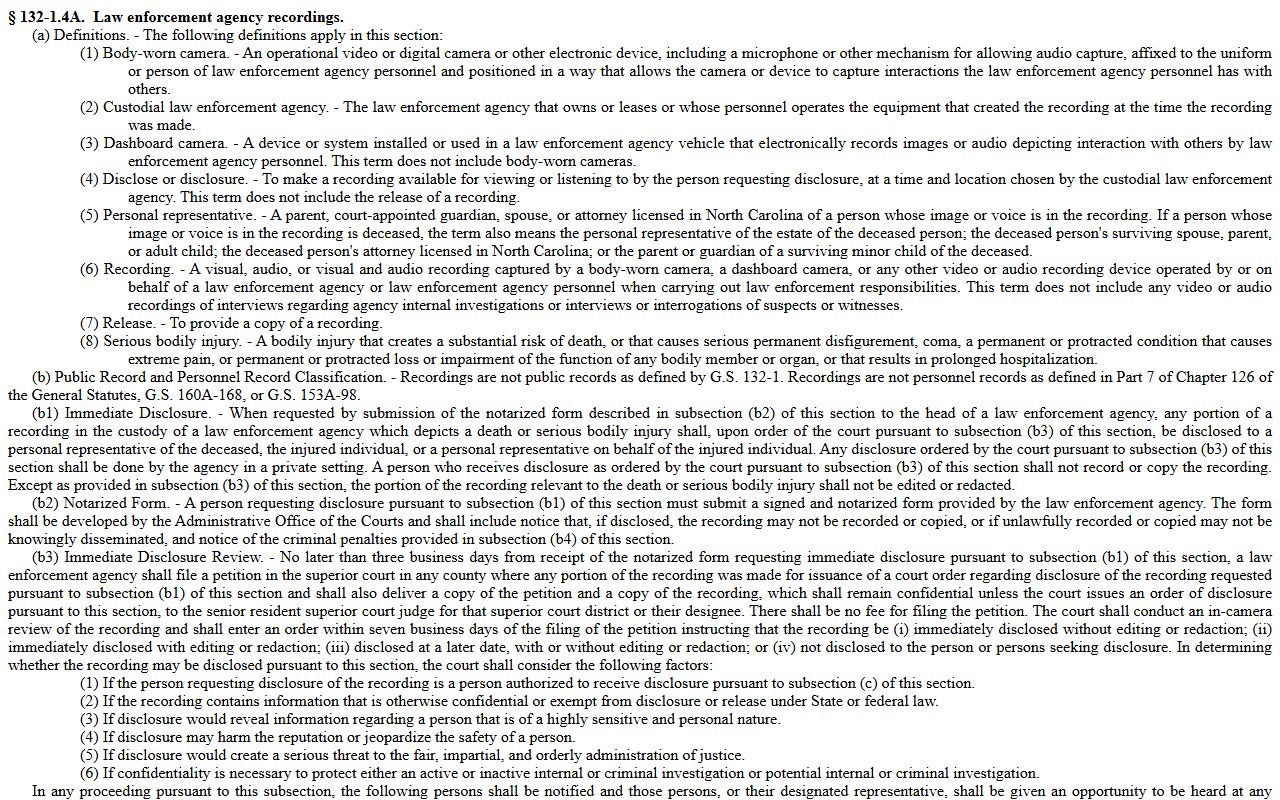
This distinction keeps the search path clear: the Clerk handles the criminal case file, while agency records follow public-record request and statutory review channels.
Cabarrus Sealed vs Expunged
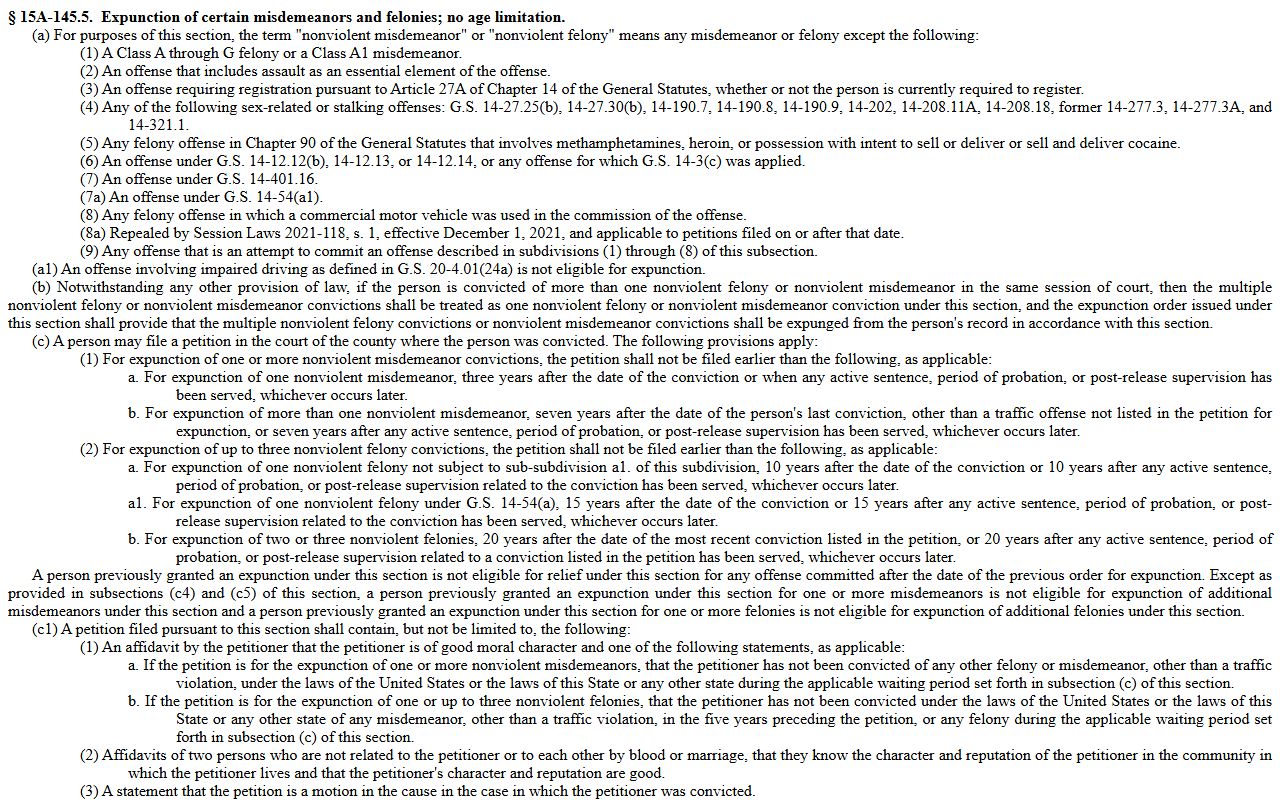
Restricted criminal records in Cabarrus County include juvenile delinquency records, abuse or neglect records, adoption records, mental-health matters, sealed files, and expunged records. A sealed record is hidden from ordinary public inspection by statute or court order. An expunged record is cleared from public record under Chapter 15A procedures when the court grants relief. Dismissed charges and not-guilty findings are addressed by G.S. 15A-146. Certain nonviolent misdemeanor and felony convictions may have expunction paths under G.S. 15A-145.5, subject to waiting periods and eligibility rules.
| Point | Sealed Record | Expunged Record |
|---|---|---|
| Public Visibility | Hidden from ordinary public inspection while still existing under court control. | Cleared from public record after an expunction order is granted. |
| How It Happens | By statute or court order for a protected case or protected information. | By filing an eligible petition in the county court connected to the charge or conviction. |
| Common Cabarrus Examples | Juvenile, adoption, mental-health, safety-related, and court-sealed material. | Dismissal, not-guilty, or qualifying nonviolent offense categories under Chapter 15A. |
| Search Result Effect | The public may see no entry or only redacted information. | Ordinary background checks should not disclose the expunged charge or conviction after processing. |
Expunction after dismissal or not guilty has its own state statute, and the Cabarrus Clerk is the filing point for petitions tied to local criminal records.
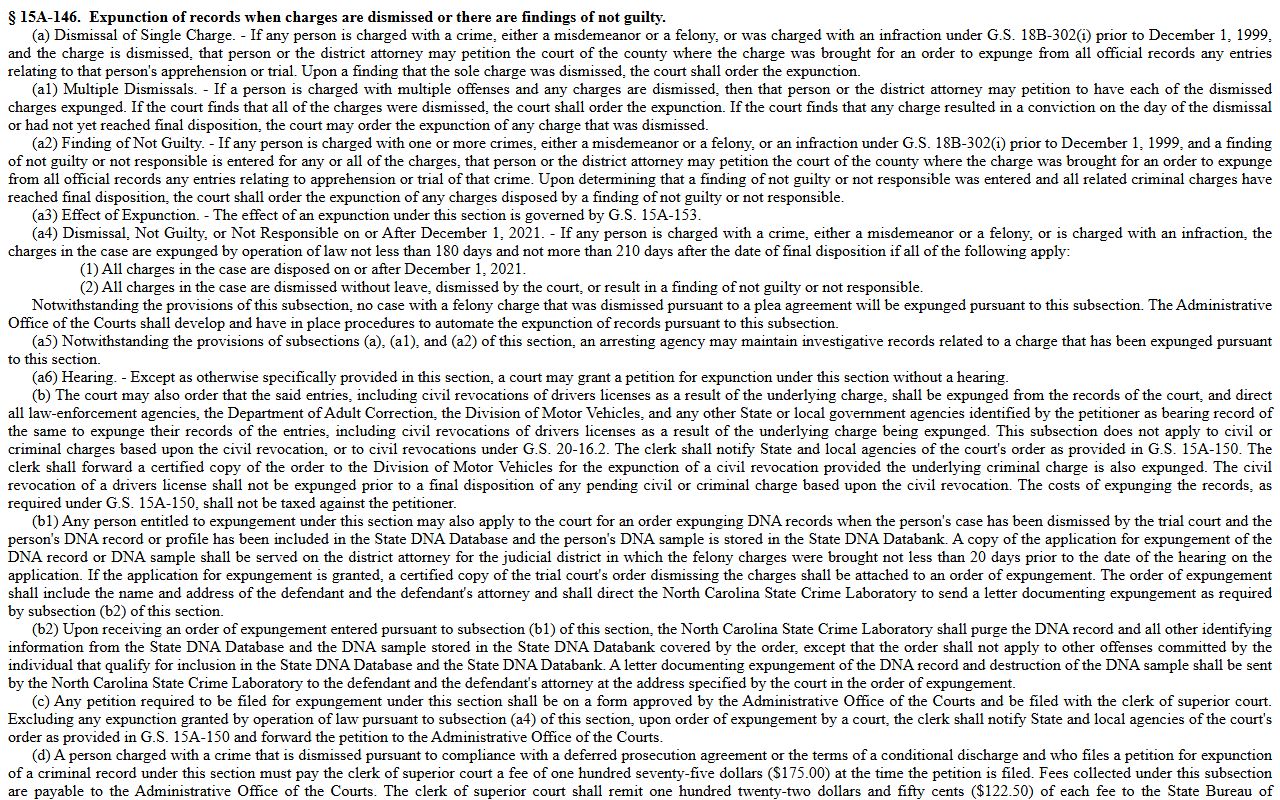
The nonviolent-offense expunction statute is a separate path with different waiting-period rules.
Private databases may not update as soon as a court order is entered, so the court order and Clerk record are the controlling sources.
Cabarrus Clerk Background Checks
For Cabarrus County criminal background checks, the Judicial Branch points users to the county clerk's office rather than the public Portal. A public self-service terminal in a clerk's office can search criminal case information by defendant name, case number, or victim/witness name. That terminal path is different from browsing a single case summary online. It is also different from using a Sheriff P2C listing, which may show arrest or custody data but not a final court disposition.
The Clerk path is also the better choice when the user needs certified copies, older paper files, or a current disposition. The Cabarrus County Clerk of Superior Court is at the Cabarrus County Courthouse, 61 Union Street South, Concord, NC 28025, with main phone (704) 262-5500 and weekday public hours listed as 8:00 AM to 5:00 PM. The courthouse security rules matter for in-person searching: cell phones, weapons, pocket knives, scissors, mace, and ammunition are prohibited, and bags may be searched.
Important: Criminal court searches are not consumer reports and should not be used for FCRA-regulated decisions without proper compliance.